Articles > Turning Data into Dollars: How Data-Driven Insights Boost Revenue in Entertainment and Leisure

The Power of Data-Driven Marketing

Data is often called the world’s most valuable resource, even surpassing commodities like gold and oil. Why? Because data holds the key to unlocking revenue growth for organizations of all types and sizes. It has a place in almost every department, but especially those related to revenue, like Marketing and Ticket Sales. According to McKinsey, “data-driven organizations are 23 times more likely to acquire customers, 6 times as likely to retain customers, and 19 times as likely to be profitable.”1

In competitive industries like entertainment and leisure, understanding your customer is essential for driving business growth. While data is abundant, the challenge lies in capturing the right information and transforming it into actionable insights. Without clear visibility into your audience’s demographics and behaviors, your marketing efforts err more on the side of guesswork than science. That also means you’ll have a hard time accurately tracking what works, and what doesn’t.

The more visibility you have into your customers, the more informed and effective your marketing strategies become, enabling you to make decisions that have a measurable impact on ticket sales and attendance.

Why Data is the Secret Ingredient to Growing Ticket Sales in the Experience Economy

Knowing your audience—whether they’re a group of friends looking for a night out or a family with young children—directly impacts how you tailor your messaging, channels, and mediums.

Data gives you the ability to segment your audiences and deliver personalized experiences. For example, one type of message might appeal to weekend thrill-seekers, while a more family-friendly tone is needed for mid-week activities. Identifying what resonates with each segment enables you to make your communications more effective, whether digital advertising, email, or offline media such as TV commercials.

There are two key types of data to consider. Here are some examples:

Capture the Right Data to Power Your Ticketing Marketing StrategyBefore you can start segmenting and analyzing your data, you need to capture it effectively. This is the foundation for making data-driven marketing decisions, and the good news is that there are powerful tools and methods to ensure you get the most out of your data.

By using these methods, you can bridge the gap between online and offline marketing, ensuring you capture crucial attribution data that helps refine future strategies.

Immersive Van Gogh by Starvox Entertainment

6 Tips to Leverage Customer Data for Maximum Impact on Ticket Sales

Now that you’ve captured valuable data, how do you turn it into actionable insights? Here are 6 ways to make the most of customer data to promote an event, experience, or attraction:

1. Know Where Ticket Sales are Coming From

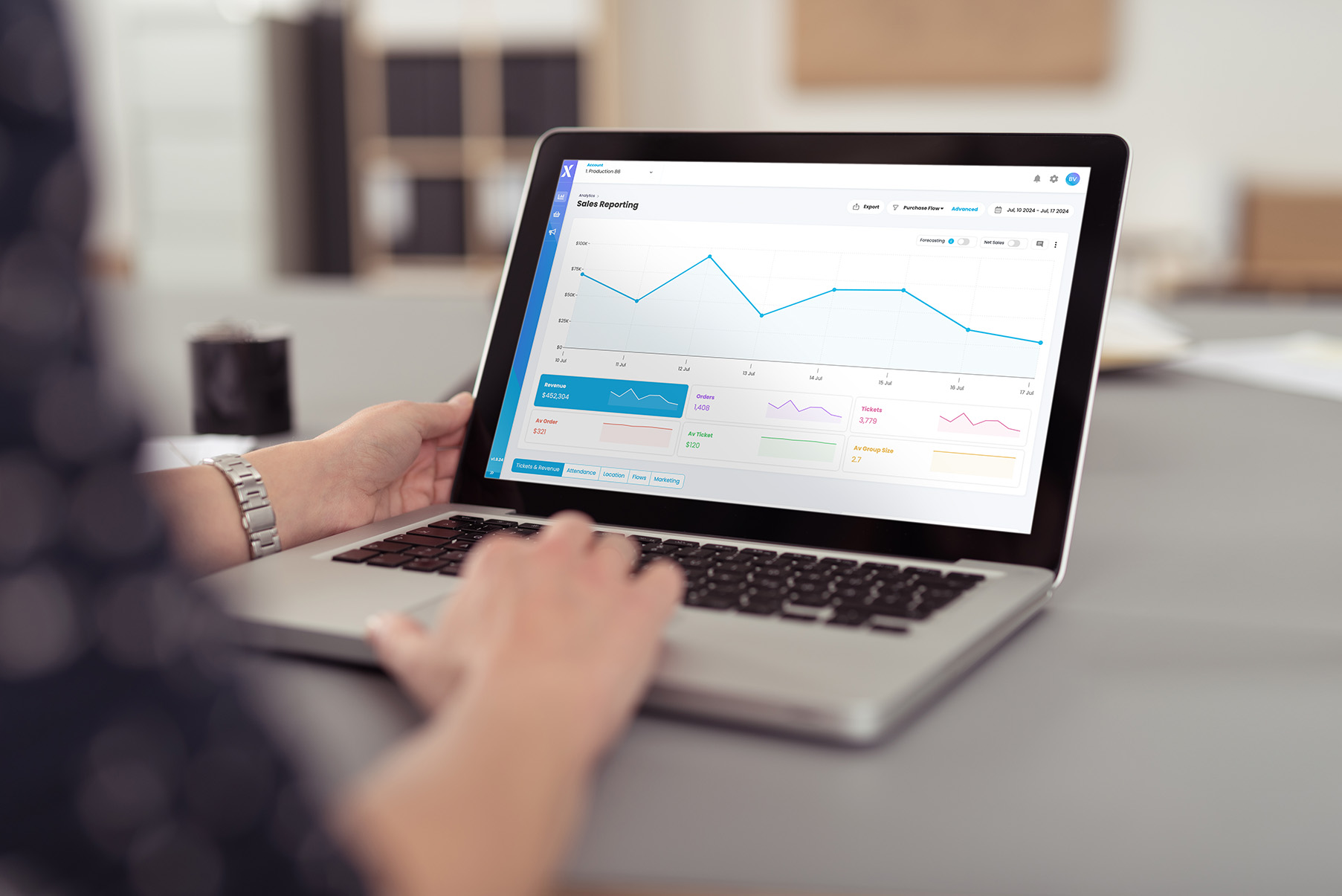
Data on its own isn’t enough—advanced analytics turns it into insights you can act on. With real-time dashboards, you can quickly see which campaigns are driving the most conversions and make data-backed decisions in the moment. Stop wasting time on spreadsheets and focus on scaling what works.

2. Segment Audiences Across Performances or Bookings

Analyzing buying patterns and behavior allows you to segment your audience and predict which groups are more likely to convert. For example, if weekends always sell out, refocus marketing efforts on mid-week events. This "manage by exception" approach ensures your attention is where it’s needed most.

3. Make Data-Backed Decisions to Ticketing Revenue

Real-time analytics let you track ROI across channels, ensuring your marketing dollars are working as hard as possible. Tools like last-click attribution help identify which campaigns are converting, so you can allocate budgets effectively and optimize spend.

4. Capture Customer Data for Long-Term Success and Event Cross-Selling

Building a robust CRM is key to future marketing success. By capturing demographic data, post-purchase feedback, and purchaser information, you’ll have a complete picture of your audience. While signup tools can help you build a mailing list, tools like post-purchase surveys help in understanding what’s driving customer decisions, providing insights for future campaigns and offline attribution.

5. Adjust in Real Time to Optimize Marketing Campaigns and Event Attendance

With real-time insights, you don’t have to wait for end-of-campaign reports to make adjustments. Track ticket sales, audience behavior, and campaign performance as it happens, allowing you to pivot instantly. This ensures your marketing spend is always optimized for the best results.

6. Use Historical Data to Forecast Trends in Bookings and Ticket Sales

Your ability to analyze historical performance data can help you predict future trends. Identify key patterns in sales and customer behavior to forecast demand, ensuring that you’re always ahead of the curve—whether it’s for seasonal events or pricing strategies.

Unleashing the Full Potential of Data-Driven Marketing for Ticketed Events

The journey to adopting data-driven marketing is pivotal for thriving companies in the competitive realms of entertainment and leisure. By understanding and applying the insights derived from your audience data, you can transform generic outreach into personalized audience communications that resonate and convert.

From capturing essential data through innovative tracking solutions to segmenting audiences for targeted campaigns, each step empowers your marketing efforts. With the right tools, data can become bedrock of strategic decision-making, allowing for agile responses to market dynamics and customer preferences. Leveraging these insights helps optimize your marketing ROI and ultimately, drives profitability.

TickX supports this journey by providing a seamless integration of analytics and marketing, ensuring you can easily access, analyze, and act on data. Our platform enriches every touchpoint of your campaign—from initial planning to post-event analysis—enabling you to continuously refine your strategies and achieve measurable success.

1 McKinsey & Company, "By the numbers: What drives sales-growth outperformance," Accessed on October 4, 2024, https://www.mckinsey.com/capabilities/growth-marketing-and-sales/our-insights/by-the-numbers-what-drives-sales-growth-outperformance

Latest Articles

Marketing
January 21, 2026

Marketing Automation for Experience Providers: Tools Built to Boost Conversions and Save Time

Marketing Automation for Experience Providers: Tools Built to Boost Conversions and Save Time

Marketers have a lot to juggle. From building campaigns to analyzing performance and finding new ways to reach audiences, time is always limited. Automating parts of your workflow frees your team to focus on higher-value strategic work instead of repetitive tasks. Marketing automation helps experience providers respond quickly to customer interactions during the small but critical window when customers are most likely to react.

TickX’s marketing automation tools are built specifically for experience providers. They support the unique communication moments surrounding events, including pre-show reminders and post-show follow-ups, and make automation simple for marketers by eliminating the need to build complex messaging flows themselves.

TickX’s marketing automation tools include adaptive cart abandonment, messaging triggers, pre-sale forms, and post-purchase surveys.

Recover Lost Revenue With Adaptive Cart Abandonment 

Adaptive cart abandonment allows you to recapture revenue that would otherwise be lost. Customers who abandoned checkout have already shown strong intent, they just need a reminder or small incentive to finish the purchase. By automating this process, you get a high-performing touchpoint with minimal setup or maintenance effort.

One TickX customer generated nearly one million dollars in revenue through adaptive cart abandonment alone, showing just how impactful this feature can be.

Use IQ to select target audiences and trigger messages based on purchase behavior, while leveraging best-in-class tools for email creation and delivery. This enables you to continue using the tools you know and love, while ensuring the right people receive the right message at the right time. Segmentation capabilities let you tailor messaging by event, ticket type, and even the add-ons selected. For example, a customer browsing midweek discounted tickets may respond to a greater discount, while someone exploring VIP upgrades may be more likely to convert with a seat-upgrade offer. Personalized messaging for each audience helps recapture high-intent customers and drive them to complete their purchase.

IQ includes a built-in web pixel that captures email addresses entered during checkout, even if the customer abandons before completing their purchase. Performance reporting for cart abandonment such as opens, clicks, and conversions, is also included  so you can optimize results over time.

Deliver Relevant Messaging That Delights With Automated Triggers

Behaviour-based outreach tends to outperform standard outreach because it reaches customers at the exact moment their intent is strongest. Automated triggers send communications based on customer actions such as buying tickets or completing an experience. These messages feel relevant and timely rather than intrusive. They arrive when the experience is already top of mind leading to higher engagement and conversions.

TickX’s automated triggers integrate with major email, SMS and CRM platforms like Mailchimp, Dotdigital, and Hubspot, enabling you to automate communications around key moments like ticket purchase and event attendance, with segmentation features for deeper personalization. Setup within IQ is intuitive and easy, so your team can launch automated messages in minutes without technical complexity.

Pre-Sale Forms and Post-Purchase Surveys That Allow For Better Targeting

Pre-sale forms and post-purchase surveys are two powerful ways to capture customer data and insights. Pre-sale forms help you measure demand before tickets go live, grow targeted mailing lists, and build momentum with the right audiences early. Post-purchase surveys help you understand what influenced the purchase, how the experience performed, and where you can improve messaging, targeting, and the overall customer experience.

Both approaches can drive strong engagement when timed well. One immersive experience partner using TickX saw a 90% response rate to an automated post-purchase survey, showing how effective these touchpoints can be when they are delivered while the experience is still top of mind.

TickX makes it easy to build pre-sale forms and post-purchase surveys. Create your form or survey within IQ, then connect it with your existing CRM for automated distribution. IQ also provides clear visibility into form and survey performance, conversions, and ROI, so you can attribute revenue directly to your pre-sale and post-purchase campaigns.

Conclusion

Purpose built marketing automation gives experience providers a smarter and more efficient way to drive conversions, and engage customers at the right moments. With tools designed specifically for the needs of experience providers, your team can work faster, market smarter and unlock measurable revenue growth.

Read More
chevron icon aqua
Booking
December 15, 2025

Why Reducing Friction at Every Step of the Purchase Journey Is Key to Conversion Optimization

Why Reducing Friction at Every Step of the Purchase Journey Is Key to Conversion Optimization

Experience providers invest significant effort into bringing the right audience to their event pages. They identify their ideal market, craft compelling campaigns, choose the most effective channels, and guide engaged buyers directly into the booking journey. Once buyers arrive, their path needs to feel effortless and exciting. If the journey becomes confusing or difficult to navigate, even enthusiastic buyers can lose momentum.

A seamless experience builds confidence and empowers buyers to make decisions quickly. That’s why reducing friction isn’t just a nice-to-have improvement; it’s one of the most impactful conversion optimization strategies available.

TickX Flows is fully optimized to reduce friction creating a clear, streamlined path from discovery to checkout and helping clients achieve an average uplift in conversions of 12- 20%.

The Calendar Stage: Keep Customers Within the Purchase Funnel

When buyers arrive on your site, the event calendar is their first touchpoint, but also the stage where we see the highest drop-off rate. Most visitors at this moment are still in “window-shopping” mode, checking potential dates, and coordinating with companions. Two key friction points often interrupt their momentum at this stage.

The first is a lack of urgency. When buyers aren’t aware of how quickly certain dates are selling, they feel no immediate need to choose a date, assuming they can return later. The second is the frustration of clicking through multiple dates only to find that none have availability, which can quickly derail their interest. 

Availability Cues That Drives Action

To keep buyers moving forward, TickX enhances the calendar experience with clear availability cues. A simple red–yellow–green system communicates availability instantly, while carefully tested wording provides a gentle sense of urgency. Buyers can immediately understand how quickly tickets are selling and make informed decisions in the moment rather than delaying. This eliminates unnecessary back-and-forth and guides users naturally into ticket selection.

Ticket Selection: From Overwhelming Choice to Confidence

For reserved-seating experiences, seat selection is a moment filled with anticipation. Buyers compare their options, and look for the perfect balance between view and value. Yet traditional 2D seat maps often lack the context buyers need to feel confident in their choice.

Buyers want to feel great about the seats they choose, knowing exactly what they’ll see and how it aligns with their expectations. When the booking experience generates that level of certainty, seat selection becomes exciting rather than overwhelming, and buyers have a natural desire to secure the seats they’ve fallen in love with.

View From Seat: Confidence Through Immersive Selection

TickX created View From Seat to transform this decision point into a powerful point of conversion. With an immersive 360° preview, buyers can explore the venue and clearly understand the view from each seat. This added context empowers them to compare options, recognize value, and confidently select the seat that best matches their expectations. It also strengthens the case for premium price points; when buyers can see exactly what they’re paying for, the value of higher-tier seats becomes unmistakably clear.

View From Seat has resulted in a 7.6% uplift in conversion for some customers already.

Checkout: The Finish Line That Should Feel Effortless

Checkout is the final step in the booking experience, and it should feel simple, fast, and reassuring. When buyers see a clear path to completion, they stay focused on the anticipation of attending, not the mechanics of the transaction. For experience providers, an efficient checkout is one of the most meaningful drivers of completed sales and customer satisfaction.

A Checkout Experience Designed for ease 

TickX enhances the checkout by minimizing required fields, enabling autofill, and supporting modern, one-tap payment methods like Apple Pay. This creates a fast and intuitive experience that carries excitement through to final confirmation. When checkout feels effortless, buyers are far more likely to complete their purchase in the moment rather than pausing the process or abandoning their cart altogether.

Converts More Attendees & Generate More Revenue

Experience providers invest heavily in attracting the right audience. Ensuring their path to purchase is smooth and intuitive allows that effort to pay off. 

Reducing friction isn’t just an enhancement; it’s a must-have strategy for driving conversions and boosting revenue. Flows is built to support this journey end-to-end so producers can convert more attendees with ease.

Read More
chevron icon aqua
Analytics
February 27, 2025

Tracking Ticket Sales and Revenue: Marketing Insights Beyond Google Analytics (GA4)

GA4 for Measuring Ticket Sales: Why You Need It, and Why It’s Not Enough

Google Analytics 4 (GA4) has officially replaced Universal Analytics, equipping marketers with a robust tool to track sales and analyze the behavior of website visitors. While GA4 offers critical insights into the customer journey, it comes with limitations that can make it challenging to fully capture the marketing and sales funnel—especially when it comes to ticket sales for events, theaters, and attractions.

Ticketed events and attractions need a reliable tool to track revenue and gain a clear, end-to-end view of the marketing funnel. However, the complexity of GA4 means it often requires additional support for complete visibility into ticket sales.

Why GA4 Is Essential for Measuring Ticket Sales and Revenue

GA4’s event-based tracking model allows businesses to monitor specific interactions—such as browsing behavior, user activity, and ticket purchases—across websites and mobile apps. This cross-device tracking can provide a holistic view of your customer’s journey, helping:

  • Understand Key Purchase Drivers: Track which actions and behaviors lead directly to ticket purchases, gaining insights into what motivates conversions.
  • Measure Campaign Performance: Identify which marketing channels are delivering the highest conversions, allowing you to allocate spend more effectively.
  • Achieve Cross-Device Insights: See how users interact with your brand across multiple devices for a better understanding of your audience’s behavior and purchasing patterns.

This level of insight is crucial for industries like theater, immersive experiences, and attractions, where every ticket sale counts. With real-time data at your disposal, GA4 enables more informed marketing decisions, helping you optimize campaigns and drive revenue growth.We recently discussed how data can help streamline marketing efforts and increase ticket sales in our article on Turning Data into Dollars.

Challenges of Setting Up GA4 for Ticketing

While GA4 is a game-changer for tracking data, configuring it specifically for ticketed events presents a range of challenges. Here are some of the most common obstacles marketers face:

  • Event Configuration Complexity: Setting up the right events to track ticket purchases, abandoned carts, and visitor actions requires a deep understanding of GA4’s architecture. Missteps in configuration can result in incomplete tracking, making it harder to follow the entire customer journey from interest to sale.
  • Cross-Domain Tracking: If your ticket sales take place on a third-party site or through multiple domains, implementing cross-domain tracking can be tricky. Without proper configuration, you might lose visibility of your customers as they move between your site and external ticketing platforms. This lack of data flow creates blind spots, making it difficult to attribute sales to specific marketing efforts accurately.
  • Steep Learning Curve: The new GA4 interface and reporting tools can be overwhelming, especially if you’re unfamiliar with custom metrics or the event-based model. Interpreting the data and making sense of the reports requires time, expertise, and continuous monitoring, which can be resource-intensive for many organizations.

Maintaining Visibility in the Funnel: The Challenge of Redirected Ticket Sales

For many businesses in the event industry, ticket sales are processed through third-party platforms that handle essential aspects like inventory management and payment processing. These systems are integral to operations and offer valuable services including operational requirements. Replacing them just to improve marketing tracking isn’t feasible or necessary.However, when customers are redirected to external sites for ticket purchases, it complicates tracking the entire customer journey with GA4. The separation between domains often disrupts the seamless flow of data, which is critical for understanding the marketing funnel and optimizing campaigns.

  • Fragmented Data: Redirecting users to another site can break the data flow, making it difficult to follow their journey from the initial website interaction to final ticket purchase. This fragmentation leads to incomplete data insights.
  • Lost Attribution: Without proper cross-domain tracking, you may lose key attribution data—making it harder to understand which marketing efforts led to conversions. This challenge complicates campaign optimization and can make it difficult to assess your return on ad spend accurately.

Fortunately, there’s a way to resolve these issues without overhauling your ticketing system.

What If You Could Embed the Entire Ticket-Buying Experience on Your Website?

Imagine a ticket-buying experience where customers never leave your website. No redirects, no interruptions—just a smooth, branded purchase journey that stays under your control from start to finish. And the best part? You can achieve this without replacing the ticketing system or significantly altering your business processes.By embedding the entire purchase flow directly on your website, you maintain full visibility into the customer journey while delivering a faster, more engaging experience for your audience.

  • Seamless Journey, From Interest to Purchase: By keeping the purchase flow on-site, you create a streamlined and intuitive experience for your audience. This approach ensures that you retain full control over data collection and tracking—eliminating the need for complex cross-domain configurations.
  • Real-Time Data at Your Fingertips: Embedding the purchase flow allows you to track sales, cart abandonment rates, and revenue in real-time. This empowers you to make quick, data-backed decisions and adjust campaigns based on what’s working—whether you’re optimizing ticket types, promotional packages, or upselling opportunities.
  • Granular Tracking with Pixel and Server-Side Data: Fully embedding the purchase journey also lets you take advantage of pixel and server-side tracking. Even when customers use ad blockers or opt out of cookies, you can still capture critical data points, ensuring accurate attribution for every transaction.
  • Close the Loop on Attribution: With the entire purchase journey embedded, you can track customer interactions from the first click to the final sale. This provides full visibility into which marketing channels and campaigns are driving ticket sales, helping you close the attribution loop. You’ll know exactly what’s working and what’s not—allowing you to optimize campaigns and confidently prove your marketing ROI.
  • Tailored Insights with Custom Reporting: Having the purchase flow fully integrated on your site also allows for advanced reporting features like annotations and campaign tagging. Whether you’re tracking a seasonal promotion or testing a new marketing strategy, you can measure and visualize the direct impact on ticket sales and make data-driven adjustments as needed.
  • Location Data for Smarter Marketing: With customers staying on your site, you can access valuable location data that shows where ticket buyers are coming from. This insight helps you refine marketing efforts by targeting high-performing regions or adjusting bids for specific areas, ensuring your budget is allocated where it delivers the best return.

By embedding the entire ticket-buying experience on your website, you not only create a smoother, more branded journey for your customers but also gain the comprehensive data you need to drive conversions and optimize your marketing strategy—without the hassle of complex tracking systems.

Why Choose TickX Over the Hassle of GA4 for Tracking Ticket Sales?

While GA4 is a powerful tool for website analytics, its complexity and the challenges of tracking ticket purchases make it less than ideal for event-driven businesses that require seamless customer journeys. With TickX, there’s no need to replace your existing ticketing system or struggle with the complexity of GA4. Our integrated platform keeps customers on-site throughout the entire booking process, offering you full, uninterrupted visibility into the marketing funnel so that you get: 

  • Seamless, On-Site Customer Journeys: TickX eliminates the need for redirects, ensuring you capture every interaction from first click to final purchase without data fragmentation.
  • Granular Insights at Every Step: Our platform delivers detailed data on customer behavior, helping you optimize each part of the funnel—from marketing channels to upsell attachment rates and beyond.
  • Clear and Actionable Reporting: TickX’s built-in analytics make it easy to track key performance metrics like sales, cart abandonment, and revenue by channel and campaign. No complex setups or external integrations are needed.
  • Streamlined Reporting for Leadership: Instead of piecing together data from multiple platforms, TickX provides a single, unified dashboard for all performance data. You can even provide platform access to your executive team, freeing up your time from report-building so you can focus on strategic execution—driving more ticket sales and revenue.
  • Seamless Integration with Existing Ticketing Systems: TickX works with the ticketing systems you already use, so there’s no disruption to your current operations. You can continue using the tools that power your business while equipping your marketing team with a better way to track customer behavior. This result is direct ticket sales from your own website while maintaining the systems and processes you rely on.

TickX provides all the tracking features you need—without the hassle. Whether you're managing theaters, immersive experiences, or attractions, TickX offers the tools to understand your sales funnel, optimize marketing, and effortlessly increase revenue.

Simplify Ticket Sales Tracking for More Actionable Insights with TickX

While GA4 remains a valuable tool for tracking website traffic, it often falls short when it comes to the ease of use and efficiency required for ticket sales tracking. The complexity of setup, cross-domain challenges, and fragmented data can make it difficult to fully understand what's driving your revenue.With TickX, you don’t have to face those challenges. Get seamless tracking of the entire customer journey, offering actionable insights into every step of your sales funnel. From conversion trends to drop-off analysis and marketing channel performance, everything is available in a single, easy-to-use dashboard.Even better, TickX can run in parallel with GA4—use GA4 to analyze traffic and TickX to track revenue. Together, they offer a comprehensive, streamlined solution that puts data-driven decision-making directly at your fingertips.

Read More
chevron icon aqua