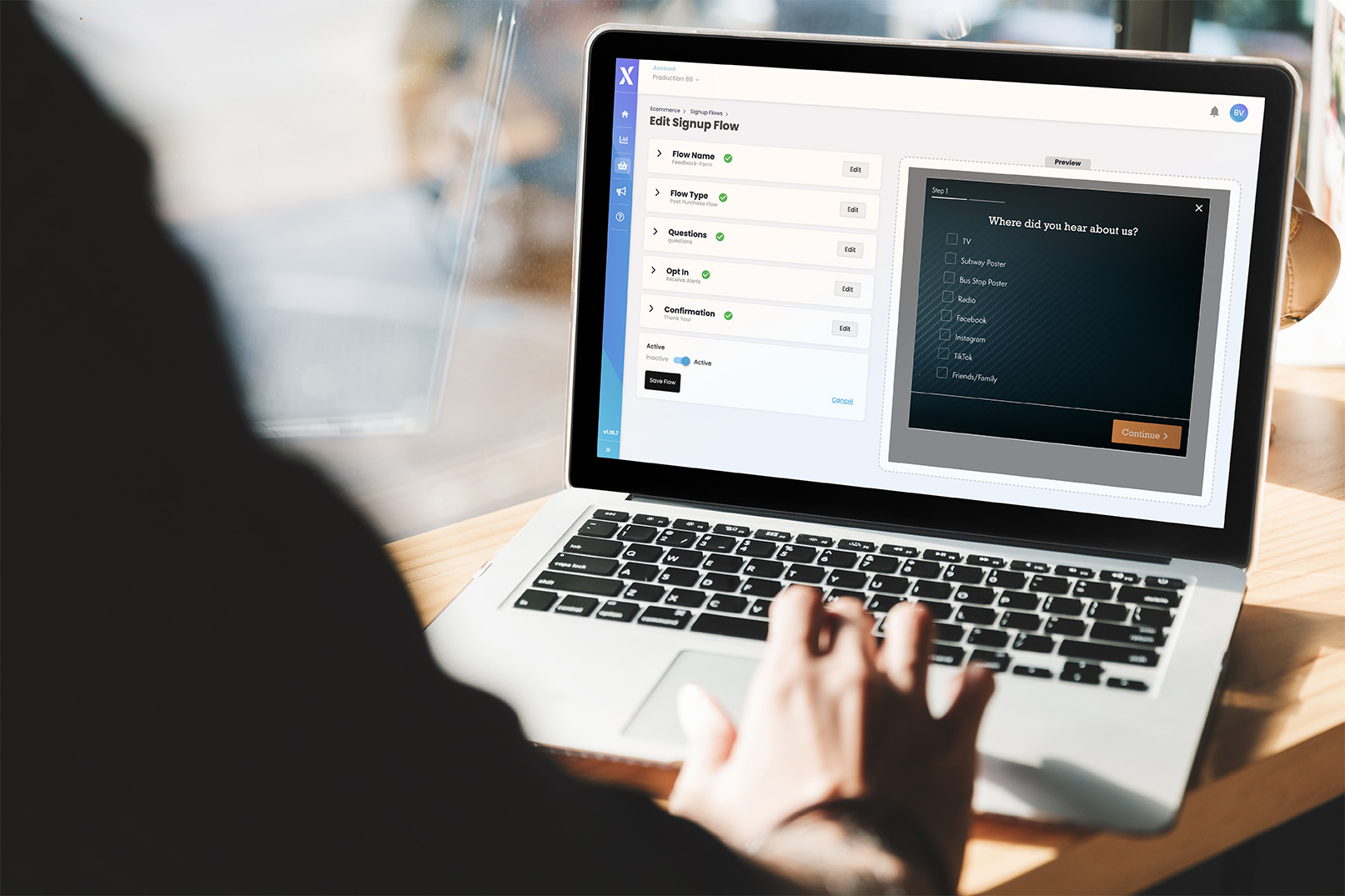
Surveys and sign-up forms are often one of the most underutilized tools for driving ticket sales in events and attractions. These tools are essential for building mailing lists, capturing customer feedback, and collecting valuable data that can significantly improve your marketing strategies.
Surveying your audience provides event organizers with critical insights, helps track revenue attribution, and strengthens relationships with customers. With customizable surveys and sign-up forms, you can supercharge both your event marketing and ticket sales. Here are four ways you can leverage surveys and sign-up forms to build customer lists and capture meaningful feedback from your audience.
Discover the best ways to boost ticket sales using pre-sale forms and learn how leveraging customer feedback can lead to event marketing success.
Effectively promoting an event often begins by building a mailing list for ticket sales using pre-sale sign-up forms, well before tickets officially go on sale. Capturing early interest in a performance or event can be crucial and understanding how to use pre-sale sign-up forms for event marketing is a game-changer. These simple tools are among the most underutilized strategies for driving ticket sales in events and attractions.
Pre-sale sign-up forms allow you to create an engaged mailing list of potential attendees, ensuring you can build excitement and nurture leads from the very beginning. By gathering emails and other key data in advance, you can run low-cost remarketing campaigns from your CRM once tickets are live.
Pre-sale sign-ups provide you with a highly-targeted audience already interested in your event. This enables you to deliver early-bird offers or exclusive deals directly to their inboxes, driving conversions while keeping advertising costs low. It’s an effective way to reach those most likely to purchase tickets and generate early momentum for your event.
Many event organizers use pre-sale sign-up forms to gather emails from potential attendees. Not only does this help test initial interest, but it also allows you to refine your marketing approach. Once you have an email list, sending personalized offers often results in higher ticket sales and conversion rates compared to generalized social media ads.
With a well-crafted pre-sale strategy, these opt-in mailing lists not only help you build anticipation, but they also lay the groundwork for future campaigns. You’ll have a qualified audience ready to buy, making it easier to drive more ticket sales as your event approaches.
Post-purchase surveys for event feedback and marketing optimization are powerful tools that provide valuable insights after a ticket purchase. These surveys allow you to ask attendees how they heard about your event, what influenced their decision, and key demographic details—all without disrupting the conversion process.
By implementing post-purchase surveys, attractions can gain deep insights into customer motivations, demographics, and marketing attribution, helping you better understand your audience. This feedback can be used to improve future marketing strategies and refine your approach to offline attribution.
This is particularly effective for marketers running offline campaigns, such as in theater or live events. A post-purchase survey can reveal whether attendees discovered the show through a local radio ad, TV commercial, or a poster in the subway. These insights are invaluable for proving marketing effectiveness, determining which channels are driving sales, and optimizing your advertising spend to get the best return.
The data collected from surveys and sign-up forms isn’t just useful for gathering event feedback—it’s an essential resource for building targeted marketing campaigns. Whether you're segmenting customers based on their responses or creating lookalike audiences, this data allows you to tailor your messaging to reach the right people with the right content. By understanding your audience’s preferences and behaviors, you can craft more personalized marketing efforts that resonate with potential ticket buyers.
This is especially important because linking survey responses to ticket sales helps you directly attribute revenue to specific marketing activities. Knowing which channels or campaigns led to conversions provides a clear understanding of the ROI of your marketing efforts. You can also use survey data to create audience segments for remarketing campaigns, targeting those who have shown interest in similar events. Using survey data to drive targeted event marketing campaigns helps event organizers create more personalized outreach based on customer preferences. This kind of precise targeting boosts engagement and conversion rates, making your marketing more efficient.
For example, event organizers can use survey data to segment their audience based on interests or preferences, then launch remarketing email campaigns to promote upcoming events to customers who showed interest in similar past experiences. This ensures that marketing dollars are spent on the most engaged audience, increasing the likelihood of ticket sales and optimizing overall marketing spend.
Survey data is a vital tool for adopting a targeted marketing approach that allows you to personalize communications with high-intent customers and potential ticket buyers.
Surveys and sign-up forms are not just about collecting data—they are essential tools for improving event marketing strategies, building mailing lists, and gaining deeper insights into your audience. With TickX’s customizable surveys and sign-up forms, you can gather actionable data that powers your entire sales funnel, increases customer engagement, and, most importantly, drives measurable revenue growth.
TickX provides a command center for creating and managing surveys and sign-up flows, all embedded seamlessly into your purchase process. This means every interaction is captured without disrupting the customer journey, and the data is readily available for analysis. You can tie sign-ups directly to future revenue, link feedback to marketing campaigns, and sync opt-in data to your CRM for targeted email marketing. Whether you're running subscriber growth campaigns or using post-purchase surveys to capture audience insights, you can easily attribute future sales to marketing efforts and continuously optimize your strategies.
With features like real-time customer segmentation, audience targeting, and the ability to track revenue attribution through subscriber campaigns, TickX gives you the tools you need to intelligently target customers who haven’t yet converted, deliver personalized messages based on customer behavior, and segment your audience based on purchase status. You can even use QR codes to streamline customer access, ensuring a smooth and engaging experience from sign-up to checkout.

Experience providers invest significant effort into bringing the right audience to their event pages. They identify their ideal market, craft compelling campaigns, choose the most effective channels, and guide engaged buyers directly into the booking journey. Once buyers arrive, their path needs to feel effortless and exciting. If the journey becomes confusing or difficult to navigate, even enthusiastic buyers can lose momentum.
A seamless experience builds confidence and empowers buyers to make decisions quickly. That’s why reducing friction isn’t just a nice-to-have improvement; it’s one of the most impactful conversion optimization strategies available.
TickX Flows is fully optimized to reduce friction creating a clear, streamlined path from discovery to checkout and helping clients achieve an average uplift in conversions of 12- 20%.
When buyers arrive on your site, the event calendar is their first touchpoint, but also the stage where we see the highest drop-off rate. Most visitors at this moment are still in “window-shopping” mode, checking potential dates, and coordinating with companions. Two key friction points often interrupt their momentum at this stage.
The first is a lack of urgency. When buyers aren’t aware of how quickly certain dates are selling, they feel no immediate need to choose a date, assuming they can return later. The second is the frustration of clicking through multiple dates only to find that none have availability, which can quickly derail their interest.
To keep buyers moving forward, TickX enhances the calendar experience with clear availability cues. A simple red–yellow–green system communicates availability instantly, while carefully tested wording provides a gentle sense of urgency. Buyers can immediately understand how quickly tickets are selling and make informed decisions in the moment rather than delaying. This eliminates unnecessary back-and-forth and guides users naturally into ticket selection.
For reserved-seating experiences, seat selection is a moment filled with anticipation. Buyers compare their options, and look for the perfect balance between view and value. Yet traditional 2D seat maps often lack the context buyers need to feel confident in their choice.
Buyers want to feel great about the seats they choose, knowing exactly what they’ll see and how it aligns with their expectations. When the booking experience generates that level of certainty, seat selection becomes exciting rather than overwhelming, and buyers have a natural desire to secure the seats they’ve fallen in love with.
TickX created View From Seat to transform this decision point into a powerful point of conversion. With an immersive 360° preview, buyers can explore the venue and clearly understand the view from each seat. This added context empowers them to compare options, recognize value, and confidently select the seat that best matches their expectations. It also strengthens the case for premium price points; when buyers can see exactly what they’re paying for, the value of higher-tier seats becomes unmistakably clear.
View From Seat has resulted in a 7.6% uplift in conversion for some customers already.
Checkout is the final step in the booking experience, and it should feel simple, fast, and reassuring. When buyers see a clear path to completion, they stay focused on the anticipation of attending, not the mechanics of the transaction. For experience providers, an efficient checkout is one of the most meaningful drivers of completed sales and customer satisfaction.
TickX enhances the checkout by minimizing required fields, enabling autofill, and supporting modern, one-tap payment methods like Apple Pay. This creates a fast and intuitive experience that carries excitement through to final confirmation. When checkout feels effortless, buyers are far more likely to complete their purchase in the moment rather than pausing the process or abandoning their cart altogether.
Experience providers invest heavily in attracting the right audience. Ensuring their path to purchase is smooth and intuitive allows that effort to pay off.
Reducing friction isn’t just an enhancement; it’s a must-have strategy for driving conversions and boosting revenue. Flows is built to support this journey end-to-end so producers can convert more attendees with ease.

Google Analytics 4 (GA4) has officially replaced Universal Analytics, equipping marketers with a robust tool to track sales and analyze the behavior of website visitors. While GA4 offers critical insights into the customer journey, it comes with limitations that can make it challenging to fully capture the marketing and sales funnel—especially when it comes to ticket sales for events, theaters, and attractions.
Ticketed events and attractions need a reliable tool to track revenue and gain a clear, end-to-end view of the marketing funnel. However, the complexity of GA4 means it often requires additional support for complete visibility into ticket sales.
GA4’s event-based tracking model allows businesses to monitor specific interactions—such as browsing behavior, user activity, and ticket purchases—across websites and mobile apps. This cross-device tracking can provide a holistic view of your customer’s journey, helping:
This level of insight is crucial for industries like theater, immersive experiences, and attractions, where every ticket sale counts. With real-time data at your disposal, GA4 enables more informed marketing decisions, helping you optimize campaigns and drive revenue growth.We recently discussed how data can help streamline marketing efforts and increase ticket sales in our article on Turning Data into Dollars.
While GA4 is a game-changer for tracking data, configuring it specifically for ticketed events presents a range of challenges. Here are some of the most common obstacles marketers face:
For many businesses in the event industry, ticket sales are processed through third-party platforms that handle essential aspects like inventory management and payment processing. These systems are integral to operations and offer valuable services including operational requirements. Replacing them just to improve marketing tracking isn’t feasible or necessary.However, when customers are redirected to external sites for ticket purchases, it complicates tracking the entire customer journey with GA4. The separation between domains often disrupts the seamless flow of data, which is critical for understanding the marketing funnel and optimizing campaigns.
Fortunately, there’s a way to resolve these issues without overhauling your ticketing system.
Imagine a ticket-buying experience where customers never leave your website. No redirects, no interruptions—just a smooth, branded purchase journey that stays under your control from start to finish. And the best part? You can achieve this without replacing the ticketing system or significantly altering your business processes.By embedding the entire purchase flow directly on your website, you maintain full visibility into the customer journey while delivering a faster, more engaging experience for your audience.
By embedding the entire ticket-buying experience on your website, you not only create a smoother, more branded journey for your customers but also gain the comprehensive data you need to drive conversions and optimize your marketing strategy—without the hassle of complex tracking systems.
While GA4 is a powerful tool for website analytics, its complexity and the challenges of tracking ticket purchases make it less than ideal for event-driven businesses that require seamless customer journeys. With TickX, there’s no need to replace your existing ticketing system or struggle with the complexity of GA4. Our integrated platform keeps customers on-site throughout the entire booking process, offering you full, uninterrupted visibility into the marketing funnel so that you get:
TickX provides all the tracking features you need—without the hassle. Whether you're managing theaters, immersive experiences, or attractions, TickX offers the tools to understand your sales funnel, optimize marketing, and effortlessly increase revenue.
While GA4 remains a valuable tool for tracking website traffic, it often falls short when it comes to the ease of use and efficiency required for ticket sales tracking. The complexity of setup, cross-domain challenges, and fragmented data can make it difficult to fully understand what's driving your revenue.With TickX, you don’t have to face those challenges. Get seamless tracking of the entire customer journey, offering actionable insights into every step of your sales funnel. From conversion trends to drop-off analysis and marketing channel performance, everything is available in a single, easy-to-use dashboard.Even better, TickX can run in parallel with GA4—use GA4 to analyze traffic and TickX to track revenue. Together, they offer a comprehensive, streamlined solution that puts data-driven decision-making directly at your fingertips.

Who is your ideal ticket buyer, and how do you reach them? The days of broad, one-size-fits-all marketing are over. Personalization is now essential for attracting the right customers to your events. Audience segmentation for events is the key to boosting ticket sales, optimizing your marketing budget, and ensuring your message resonates with the right audience.
Whether you manage a year-round attraction, a pop-up festival, a theatre production, or a special exhibit, understanding your audience is critical to running effective campaigns. Audience segmentation enables you to target specific groups based on real data—like buying behavior, geographic location, or content preferences. The result? Personalized marketing campaigns that lead to higher conversions and increased revenue.
Broad, one-size-fits-all marketing campaigns often lead to low engagement and wasted resources. One of the biggest hurdles event organizers face is reaching their ideal audience. The good news? In the experience economy, marketers actually have access to the attendee data they need for a more targeted approach. They just need the right tools to capture, analyze, and act on this data for both digital and offline advertising campaigns.
For example, promoting a family-friendly theater show to an audience segment made up mostly of single adults is unlikely to generate strong results. Likewise, advertising to people far from your venue could lead to wasted ad spend and missed opportunities to fill seats.
This is where audience segmentation for events makes all the difference. By breaking your audience into more targeted groups—such as local families, frequent attendees, or genre enthusiasts—you can craft an event marketing strategy that speaks directly to each group’s unique needs and preferences.
Using the Right Tools to Capture and Action Audience DataThe key to overcoming these challenges is having the right tools to collect and action data effectively. With the right audience segmentation tools, you can not only capture geographic data on where your buyers are located but also identify trends that allow for more strategic targeting.For example, seeing audience hotspots might suggest offline advertising opportunities, like placing ads at bus stops or subway stations near these high-interest areas. Similarly, using audience data to identify midweek ticket buyers enables you to offer special promotions or discounts to drive sales during off-peak times or underperforming shows.

Audience segmentation helps you overcome these challenges by organizing your potential attendees into groups that share similar traits, behaviours, or preferences. When you understand who your audience is, you can design a marketing strategy for your experience or attraction that hits the mark.
There are several types of segmentation event marketers can use:

TickX offers an audience builder that takes the guesswork out of segmentation by using your event’s real customer data. Our platform captures and processes data from every interaction—whether it’s a first click on an ad, a site visit, or the final ticket purchase. Even when ad blockers are used, we ensure that the entire journey is tracked.
Here’s how TickX helps you build high-performing audience segments:
Example Use Case:
A museum targeting families can use TickX to efficiently capture customer data and build a segment based on previous ticket buyers who attended during off-peak times, such as Monday-Wednesday. From there, the museum or attraction can use this data to target similar ticket buyers in the region with specific ads and promotions to boost attendance during midweek lulls.How to Leverage TickX for Effective Audience SegmentationTo get the most out of audience segmentation, you need a strategy that maximizes the potential of your customer data. Here’s how TickX audience builder and advertising integration tools can help:

Audience segmentation is about precision, not guesswork. By focusing your marketing efforts on specific, well-defined groups, you ensure that your campaigns are highly relevant, which leads to higher engagement and conversion rates.
With the right segments in place, you can:
Unlock the Power of Audience Segmentation with TickX Audience segmentation for experiences and attractions is the key to a more effective event marketing strategy and a proven way to boost ticket sales. By using TickX’s audience builder, event organizers can easily tap into valuable customer data to create highly targeted marketing campaigns that boost ticket sales and improve ROI.